
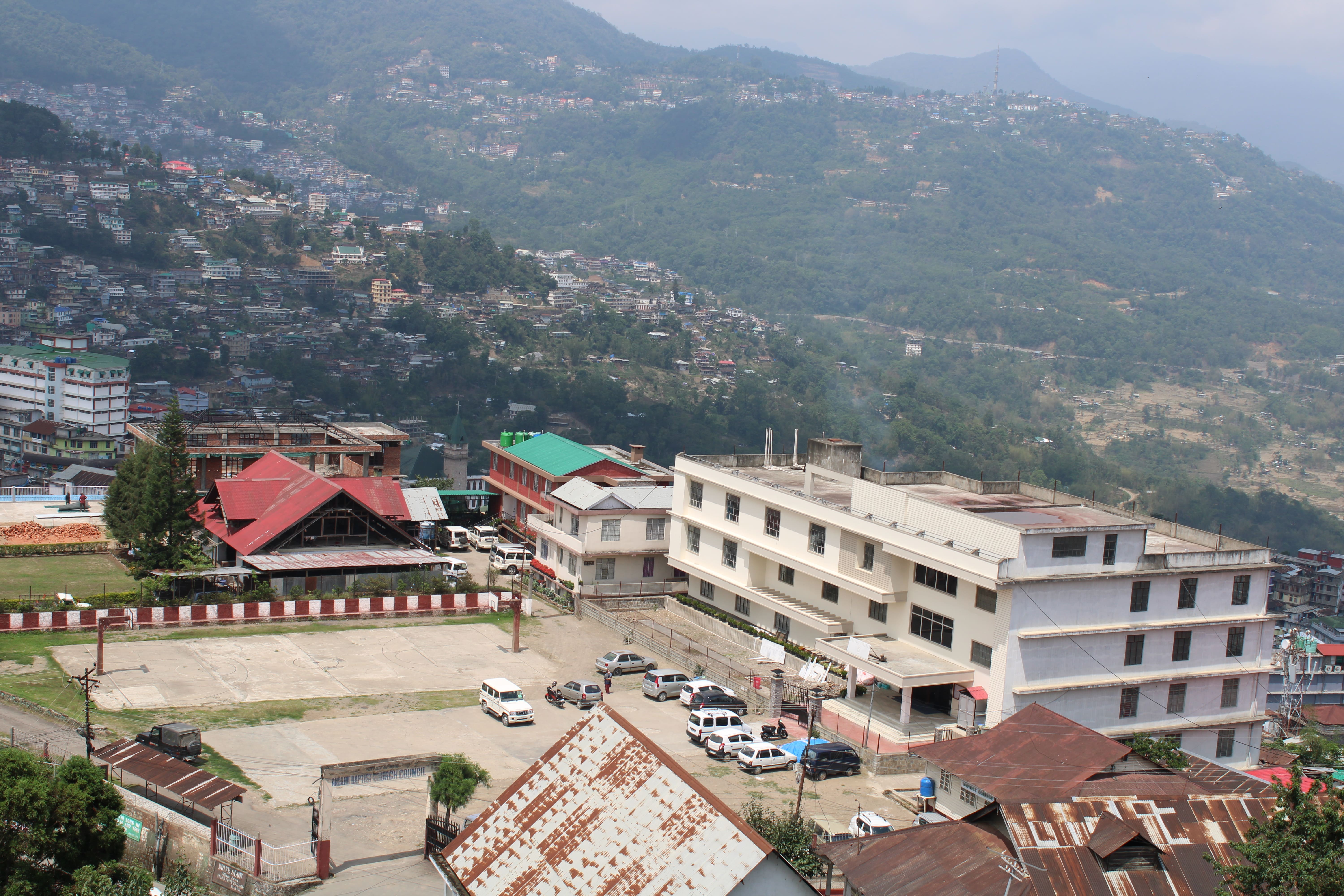
The Department of Political Science, Baptist College Kohima, organized a thought-provoking talk on the Free Movement Regime (FMR) at Rivenburgs Memorial Chapel on Saturday, 6th September 2025. The program began at 10:00 am under the chairship of Ms. Naro, with invocation by Mr. Daniel Konyak and welcome address by Mr. L. Thsidelong Sangtam, Head of the Department of Political Science. A special number was presented by Ms. Vichünuo before the session began.
The resource person, Dr. Khriezo Yhome, delivered an insightful lecture on the historical and political background of the Indo-Myanmar border and the evolution of the Free Movement Regime. He traced the roots of the boundary-making process to the Treaty of Yandabo (1826) and highlighted how colonial expansion, especially around the Patkai hills, laid the foundation for the present-day border. Dr. Yhome emphasized that the local tribal communities, particularly the Nagas, were never consulted during boundary demarcations or subsequent policy decisions, including the adoption and suspension of the FMR.
Explaining the concept, he noted that FMR was introduced after Burmese independence, allowing people on both sides of the border to cross freely without travel documents. This arrangement, enjoyed until early 2024, was suspended by the Government of India citing security concerns, accompanied by the proposal to fence the border. He pointed out that the move has generated strong opposition among borderland communities who see FMR as essential to preserving their ancestral ties, cultural identity, and ethnic unity.
Addressing key questions, Dr. Yhome discussed why people in the borderlands oppose the withdrawal of FMR and border fencing. He highlighted three perspectives on the issue:
- The Frontier Framework – where borders are fluid and shifting.
- The National Borders Framework – which sees borders as fixed and to be defended.
- The Borderlands Framework – which recognizes borders but stresses human rights, movement, and cultural security of the people living along them.
He concluded that scrapping the FMR is not only historically and politically illogical but also practically difficult given the hilly terrain of the Indo-Myanmar region.
The lecture was followed by an engaging Q&A session, where students and faculty interacted with the speaker on the implications of India’s policy shift. The program ended with the vote of thanks delivered by Mr. Seyiesilie Vüprü. Ushers, class representatives, and the student council assisted in organizing the event, while Ms. Imtisenla Mokholee served as photographer and attendance in-charge. The rapporteur for the event was Ms. Setonu Pucho.


