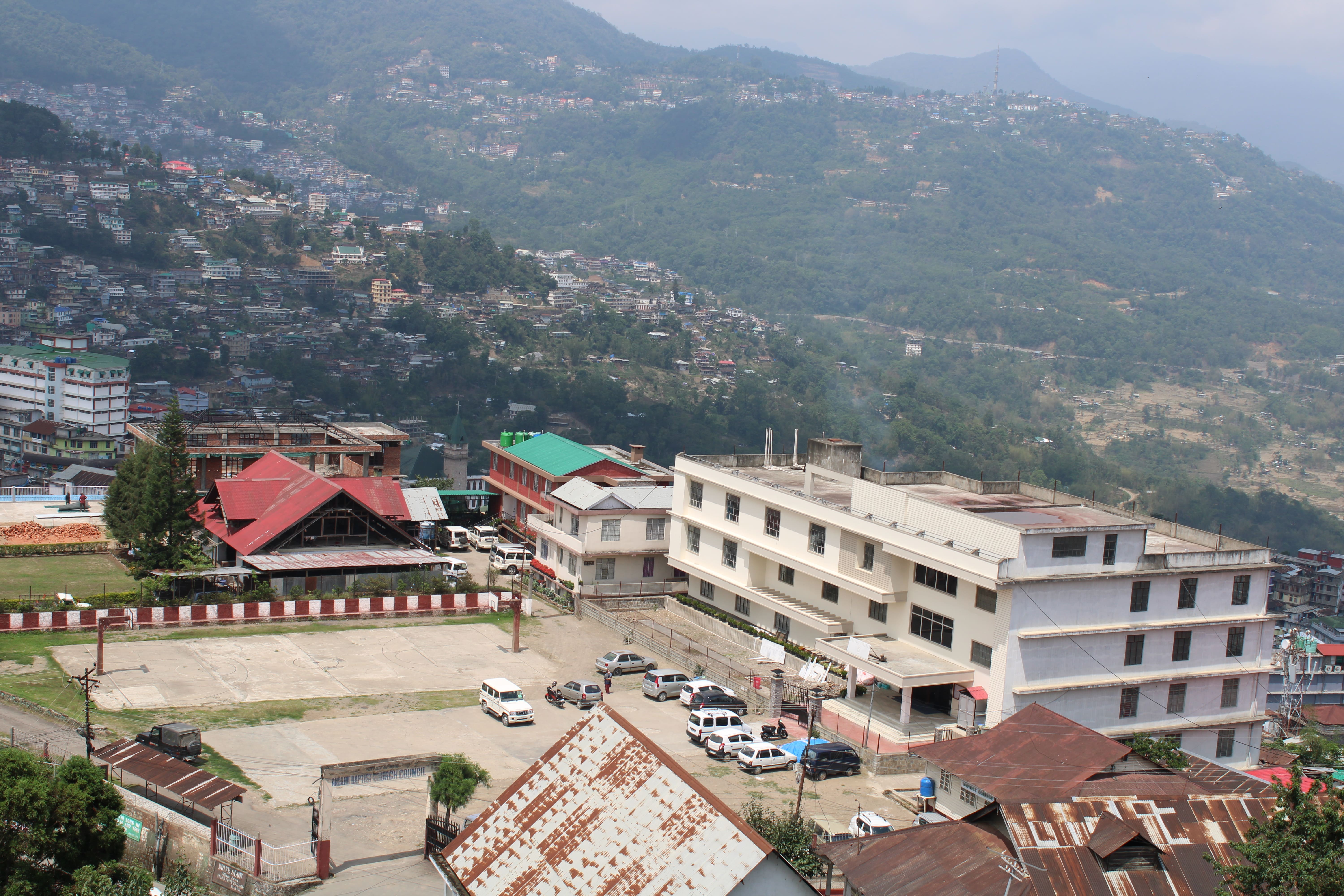
The Department of Political Science, Baptist College, Kohima, organized a talk titled “War Through an Intersectional Lens” on 5th March 2026 at 2:00 PM at Rivenburgs Memorial Chapel in collaboration with St. Andrews University, UK. The programme was chaired by Ms. Rüülhou-ü Mere, Assistant Professor, Department of Political Science.
The event commenced with a welcome address by Ms. Naro, Head of the Department, who highlighted that the causes of conflict are often multifaceted and shaped by intersecting systems of power and gender. She emphasized the importance of understanding these intersections in order to develop more inclusive approaches to peace and security.
This was followed by a Note on the Event delivered by Mr. Seyiesilie Vüprü, Assistant Professor, Department of Political Science who reflected on the relevance of International Relations in understanding the ongoing wars and conflicts around the world. He emphasized that contemporary global developments make it increasingly important for students to critically engage with issues of war, conflict, and peace.
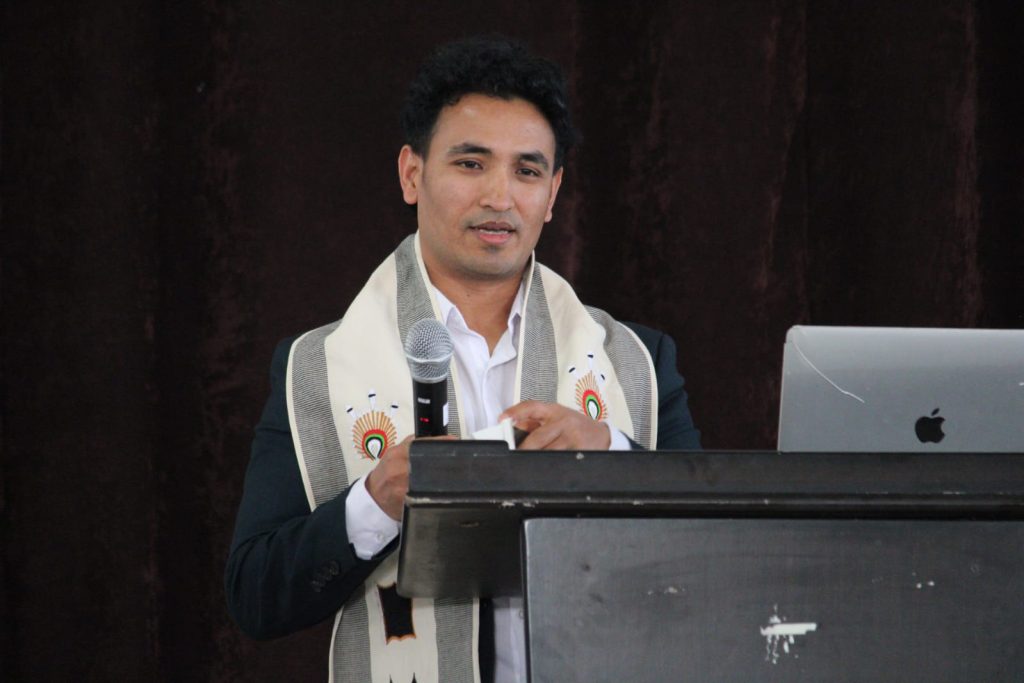
The Resource Person, Dr. Keshab Giri, lecturer in International Relations, University of St. Andrews, UK, delivered an insightful lecture drawing from his book titled War Through an Intersectional Lens: Female Combatants and the Maoist Insurgency in Nepal. The talk explored the relationship between gender and war, with particular reference to the Maoist insurgency in Nepal (1996–2006). The speaker discussed the participation of women as combatants during the conflict and examined the various social and political factors that influenced their involvement in armed movements.
Drawing from both research and personal experiences, the speaker shared insights from encounters with female combatants, highlighting how issues such as inequality, marginalization, and structural power relations shape individual choices in times of conflict. He also reflected on the political developments in Nepal following the end of the insurgency, including the adoption of the 2015 Constitution and the country’s evolving democratic processes.
The lecture emphasized that the end of war does not necessarily signify the establishment of peace, as many social and political challenges continue even after conflicts formally conclude. Through the concept of intersectionality, the speaker explained how identities such as ethnicity, race, and gender intersect to shape people’s experiences of conflict and marginalization.
The session concluded with an engaging interaction between the speaker and the participants, during which students raised questions and reflected on the themes discussed in the lecture.
The programme ended with a vote of thanks delivered by Ms. Kevichuse-ü Agnes, Assistant Professor, Department of Political Science.