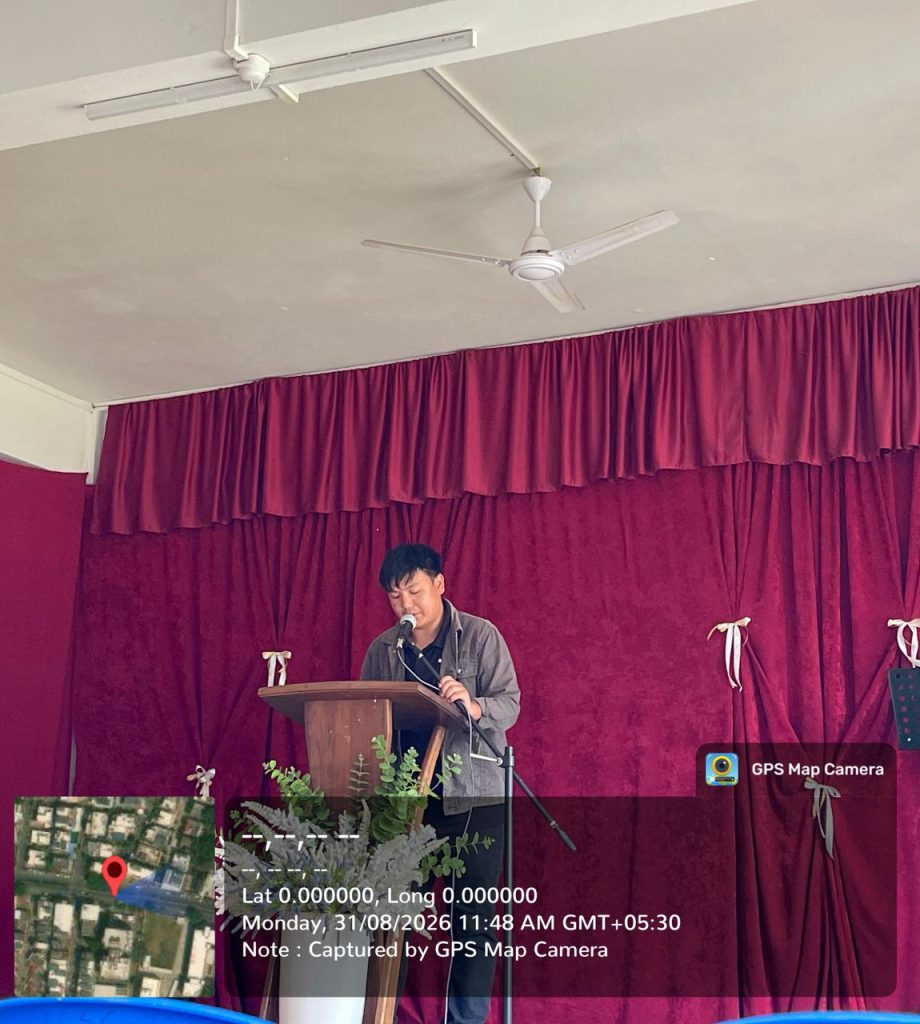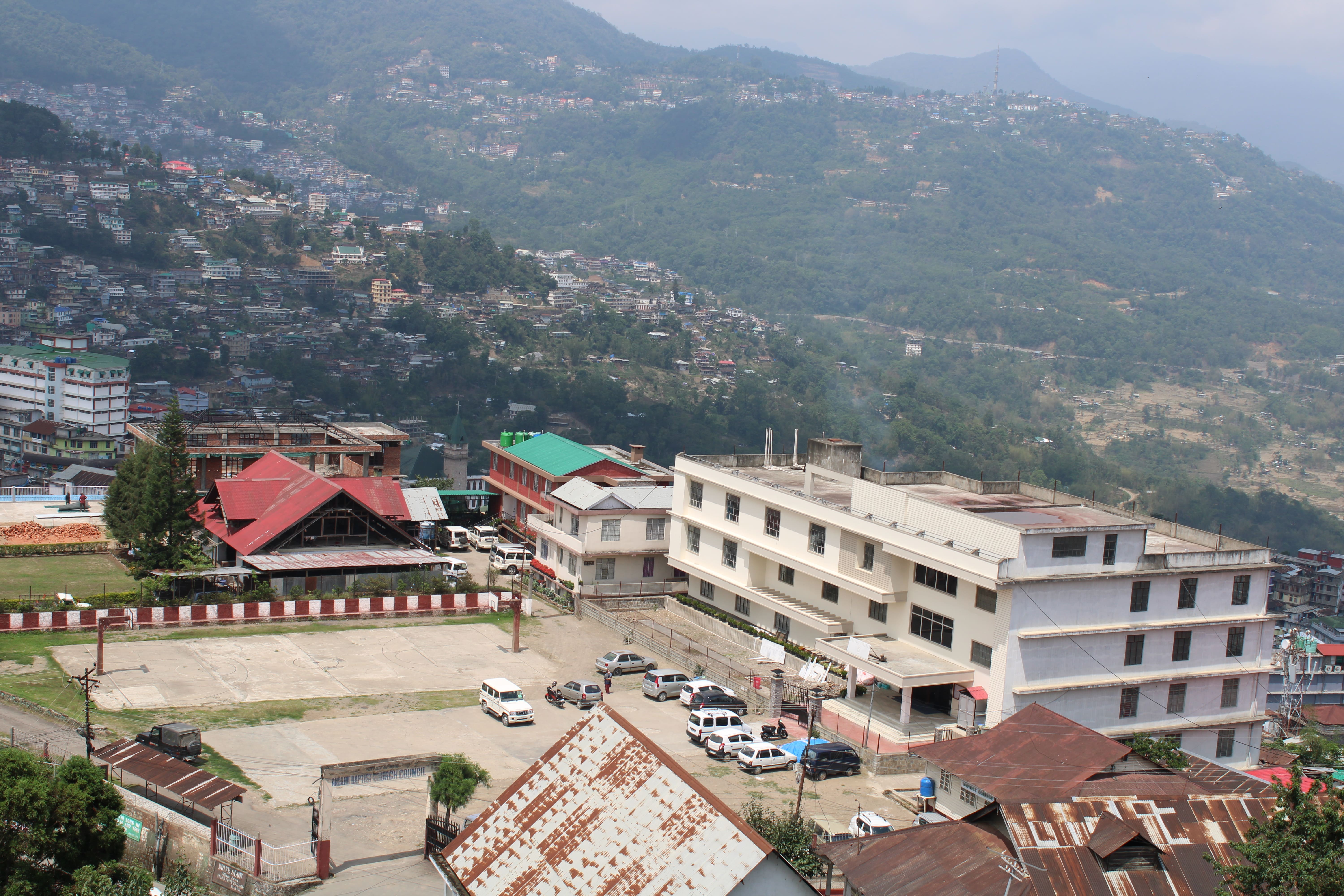
An awareness programme on “Drug Addiction and It’s Effects on the Youth,” was held on 31st August, 2026 at the Chapel Hall of Baptist College, Sechü Zubza Campus. The programme was organised by the Department of Police, Sechü Zubza, in collaboration with the Substance Abuse Committee of Baptist College Kohima, with the objective of creating awareness among students about the dangers of drug abuse, and the legal consequences of drug-related activities.
The programme featured Mr. Sosang Ao Jamir as the resource person, who shared valuable insights concerning drug abuse and its consequences. He began by emphasising that drug addiction is not merely a legal issue but also a serious social concern that affects individuals, families and society as a whole. He stated that approximately 1.2 lakh people in the state are affected by drug use, which he noted to be around 6% of the state’s population.
The resource person discussed some of the major reasons why young people become vulnerable to drug abuse. Drawing from his experiences while being posted in different regions of Nagaland, he explained how many youth and students fall prey to substance abuse through experimentation, depression, curiosity and peer influence. He cautioned the students that what may begin as a seemingly harmless experiment can gradually lead to addiction. He stressed that one wrong decision can have serious and lasting consequences. He further highlighted the physical and mental health consequences of drug abuse. More importantly, addiction can disrupt education, career prospects and the future of young people.
A significant part of the programme focused on the Narcotic Drugs and Psychotropic Substances (NDPS) Act, 1985. The resource person explained that the Act provides legal provisions concerning narcotic drugs and psychotropic substances and highlighted Section 27, relating to punishment for consumption of certain narcotic drugs and psychotropic substances. He also spoke about the serious legal consequences associated with the transportation and trafficking of drugs, including the possibility of imprisonment and other penalties.
The students were also cautioned to remain vigilant while receiving or delivering packages, as such packages could potentially contain prohibited narcotic substances. The resource person warned that becoming involved in the transportation of illegal substances, even unknowingly, could result in serious legal complications and criminal records. He therefore urged everyone to exercise caution and not accept or transport suspicious packages on behalf of others.
The importance of prevention, rehabilitation and counselling was also emphasised. The resource person stated that the authorities are making efforts to help individuals struggling with addiction by facilitating counselling and support through rehabilitation centres and prayer centres. He encouraged students who may be facing difficulties related to substance abuse, or who know someone who is, to seek help. They can approach rehabilitation centres, the police, college authorities, elders or other responsible persons for guidance and counselling.
He also spoke about the efforts being undertaken by the authorities to combat the drug problem through strict enforcement of punishment, awareness programmes, and action against drug trafficking, transportation and illegal manufacturing. According to the resource person, the drug situation in Nagaland has shown some improvement or decrease during the period 2021 to 2026. The speaker encouraged the students to be smart, resist peer pressure and avoid experimenting with drugs. He reminded the students that temporary pleasure can take away a lifetime of opportunities and encouraged them to make choices that protect their health, education and future.
The programme concluded with an appeal for everyone to join hands in building a healthy and drug-free society, by saying “no to drugs and yes to life”. The closing remarks were delivered by the Chairperson, Mr. Wangnao, bringing the awareness programme to a close. The programme was followed by a photo session with the resource person, organisers and participants.